


Focus topic
Menopause
Individual support through a phase as unique as you are.

Sound familiar?
This is where we come in if …
Measure first
The right lab test
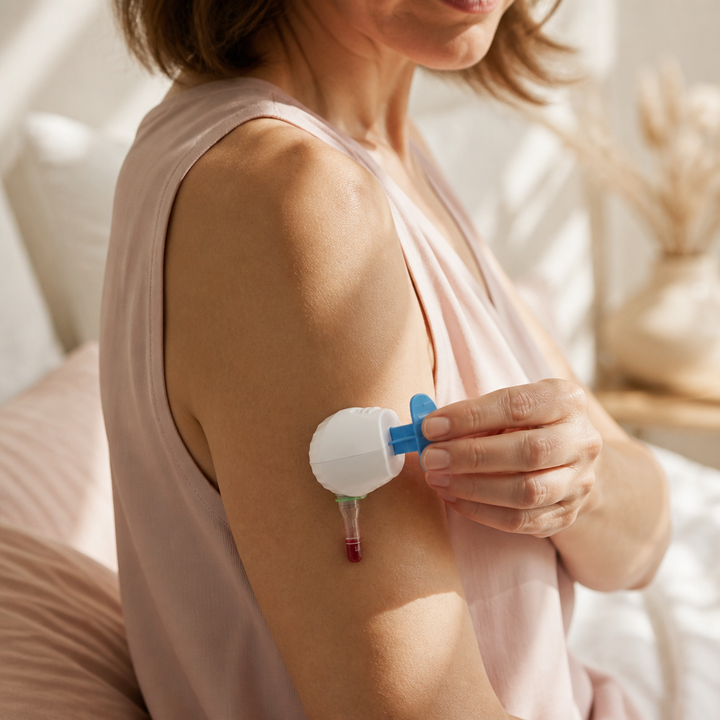
Tested at home, analysed in a Swiss laboratory – with results and a formula recommendation.
Background
Menopause – understanding what's behind it
- Menopause unfolds in four phases – over years, not overnight.
- Every woman experiences it differently; blanket advice falls short.
- The Hormone Test for Women shows where you currently stand hormonally.
Menopause
For many women, menopause marks a new stage of life that comes with more conscious decisions. The body changes gradually, routines need to be rethought and everyday life can feel unfamiliar.
It's precisely in this phase that the wish for more clarity, stability and a better understanding of your own needs often arises. Many women use this time to question old habits and develop new rituals that better suit their current
lifestyle.
It's less about quick fixes and more about
sustainable adjustments in everyday life. Anyone who consciously takes time for themselves,
plans breaks and relies on individual routines can actively
shape this phase and use it as a chance for a new way of relating to themselves.

A hormone test gives you clarity
Menopause progresses individually and often in several phases. To better understand where you currently stand, a personal insight can be helpful. The Indyvit Hormone Test lets you assess your hormonal situation with a simple self-test. Based on this data, you get a well-founded starting point that helps you plan your next steps more consciously and tailor decisions specifically to your current stage of life.
The phases of menopause
Menopause doesn't happen abruptly, but in several phases that can span years. Each phase brings its own changes and is experienced individually. Here you'll find a clear and easy-to-understand overview.
1. Premenopause – the slow beginning
Premenopause describes the time before menopause itself. The cycle is usually still regular, but the first internal changes are already beginning. Many women barely notice this phase consciously, but sometimes sense that their body feels different than before. Energy, sleep or resilience can fluctuate. This phase is often marked by the first questions about your own body and a wish for more mindfulness in daily life.

2. Perimenopause – the transition phase
Perimenopause is the most intense and longest phase of menopause. It can last several years and is marked by noticeable changes in the cycle. Periods become more irregular, shorter or longer. Many women experience this time as emotionally and physically demanding. Routines no longer work as they used to, and everyday life can feel more strenuous. At the same time, the wish to treat yourself more consciously and create new structures often arises.
Menopause isn't a state you endure – it's a phase you can shape.indyvit editorial team
3. Menopause – a clear-cut point in time
Menopause is not a period of time, but a single point in time: it's reached once a woman has gone 12 months without a period. Looking back, this moment can be clearly identified. For many women, menopause is a symbolic turning point marking a new stage of life. The focus often shifts from change towards reorientation.
4. Postmenopause – the new stability
Postmenopause begins after menopause and lasts for the rest of your life. Many women find this phase calmer and more stable. The body settles into a new rhythm, and everyday life often becomes easier to plan again. This phase is less about adjustment and more about long-term routines, wellbeing and conscious lifestyle choices.
In short
Premenopause: the first, often unnoticed changes
Perimenopause: a noticeable transition with shifting routines
Menopause: a clearly defined point in time
Postmenopause: new stability and orientation
What's next?
Menopause is a natural life phase in which many physical processes realign. These changes are individual and affect routines, sleep, energy and overall wellbeing. Many women experience this time as a turning point that calls for renewed attention to their own body. Consciously
engaging with everyday life and your personal needs helps
you shape this phase actively.
You might feel exhausted more quickly, out of balance, or no longer quite in your usual rhythm. Some days run smoothly, others demand more patience. This up-and-down is typical and can be unsettling. At the same time, it often brings a growing wish to listen more closely to yourself and restructure your everyday life.
What you can do
You can start by shaping your daily routine more consciously. Regular breaks, clear routines and time for yourself create stability. Small adjustments to everyday life help you regain a sense of control and calm.
What others have experienced
Many people in similar situations report that individually tailored support helped them structure their everyday life better. Through personal routines and targeted decisions, they were able to build more balance.
A personal snapshot can help you better understand where you currently stand. The Indyvit hormone test lets you capture your hormonal situation with a simple self-test. Based on this data, you get a well-founded starting point that helps you plan your next steps more consciously and tailor decisions specifically to your current stage of life.
Tips
Schedule fixed times for rest, stick to
simple routines and consciously make time for yourself.

Want to know where you stand?The right lab test shows you your values – tested at home, analysed in a Swiss lab, with a formula recommendation.
Go to the Hormone Test for WomenDeveloped with a medical advisory board.
We determine which values we measure and what follows from them together with doctors and scientists.
Dr. Piero Fontana
Scientist and entrepreneur
Partner, Dr. Fontana Lab GmbH

Dr. med. Manuel Puntschuh
Expert in longevity, internal medicine and digital medicine
Longhealth Basel

Dr. Roberto Pusinelli
Dr. Scienze Motorie e Sport
Owner Undertraining SAGL

Dr. med. Joris Budweg
FMH General Internal Medicine
Certified vitamin and nutrient coach

Dr. med. Constantin Weil v.d. Ahe
Medical director, physician for aesthetic medicine

Dr. med. Walter Seelig
Orthopaedic surgeon
